
One of the most dangerous misconceptions about mental health within certain religious communities is the idea that depression, anxiety, or trauma are strictly isolated, individual problems. We tend to view mental illness as a private spiritual battle taking place solely within one person’s mind or heart. We treat it like a broken bone—fix the individual, and the problem is solved.
But thirty years of living at the intersection of clinical science and theology has shown me that mental health challenges never operate in a vacuum. They are highly relational. When one member of a family system is suffering from the heavy weight of depression, anxiety, or a trauma response, the entire family system shifts to accommodate that pain.
Think of a family like a hanging mobile over a child’s crib. If you pull on just one string, every single piece of the mobile begins to twist, shake, and lose its balance. That is exactly what happens within a household.
When depression enters a home, it can manifest as a heavy, thick cloud of silence. Communication slows to a crawl, and family members may withdraw into their own separate corners, experiencing a collective loneliness that is hard to articulate. When severe anxiety is present, the home environment can become highly hyper-vigilant. The nervous systems of everyone in the house become synchronized to a state of high alert, waiting for the next panic attack, the next sudden mood shift, or the next crisis. And when trauma is part of the story, past wounds can cast long, unpredictable shadows over everyday interactions, causing family members to react to one another out of defense rather than love.
Sadly, when families look to their faith communities for help with these complex dynamics, they are too often met with judgment, misunderstanding, or rigid, unhelpful advice from religious leaders who simply don’t understand the clinical realities. They are told to have more family devotions or to correct behavioral issues, which only deepens the sense of shame and isolation.
Jesus never operated that way. When He healed people, He almost always restored them back to their families and communities. He understood that our brokenness affects our relationships, and His healing is always systemic, compassionate, and deeply relational.
If your family system is currently feeling twisted or broken by the realities of mental illness, please know that there is zero judgment from the heart of God. You are not a failing Christian family; you are a family navigating a complex medical and emotional reality in a fallen world.
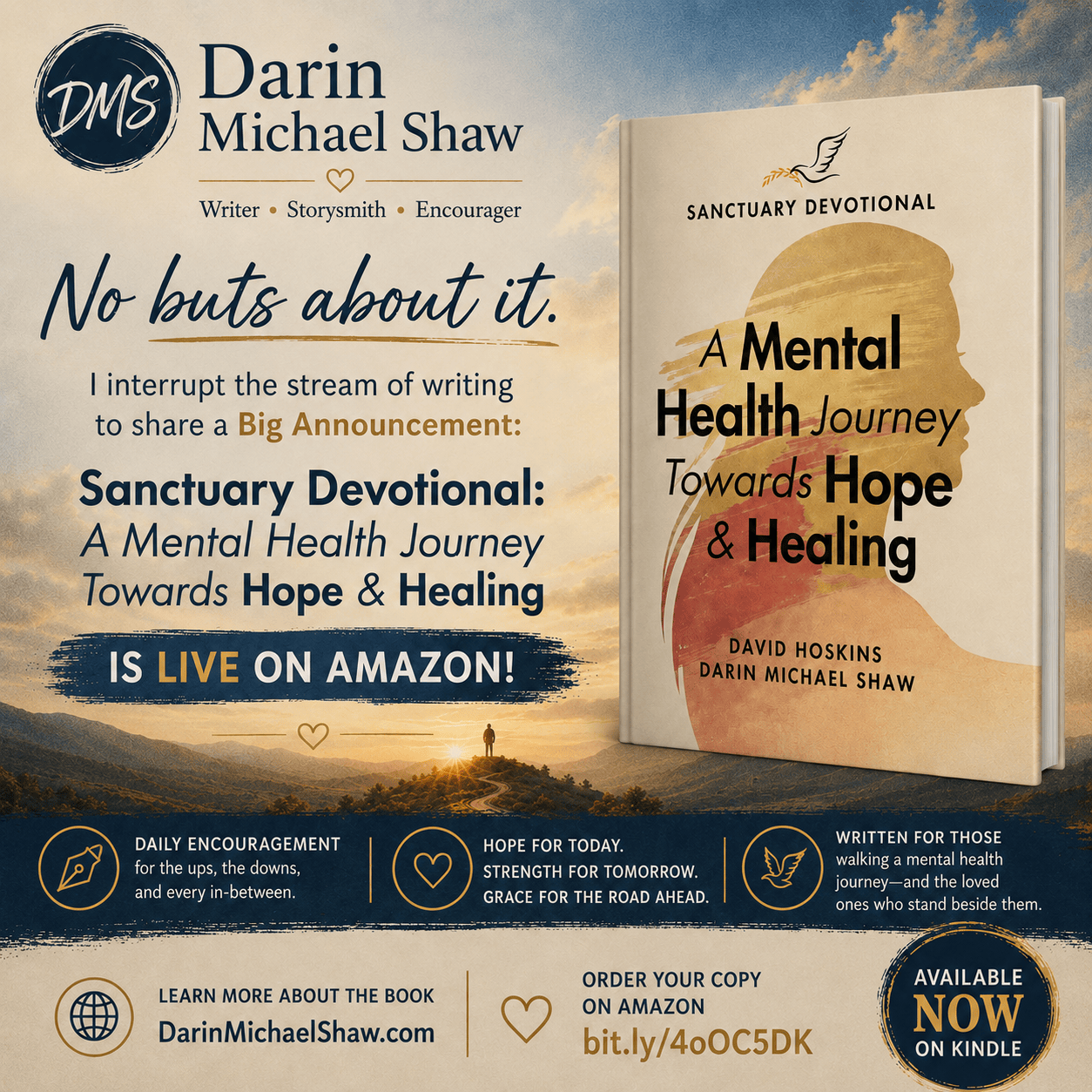
No one is meant to walk this valley alone. In our daily book, Sanctuary Devotional, David Hoskins and I talk openly about the fact that mental health treatment, clinical recovery, and deep spiritual transformation are not only completely compatible, they are often inseparable. Healing doesn’t just mean fixing the person who has the diagnosis; it means bringing an honest, raw conversation into the entire home, creating a predictable rhythm of grace that allows everyone’s nervous system a safe place to settle.
The Father’s hands are wide enough to hold your entire family. If your home feels fractured today, stop trying to force an artificial wholeness. Welcome Jesus into the middle of the mess, right into the muck and weeds of your family’s daily reality, and let Him begin to speak peace to the whole system.
Darin Michael Shaw, MDiv, MA, is a collaborative writer, researcher, and veteran of over twenty years in pastoral ministry who has navigated his own seasons of brokenness to find a deeper identity as a beloved son of God. Along with David Hoskins, he is the co-author of the newly released morning and evening devotional, Sanctuary Devotional: A Mental Health Journey Towards Hope & Healing. [Click here to order your copy of the Sanctuary Devotional on Amazon]